Readiness Report
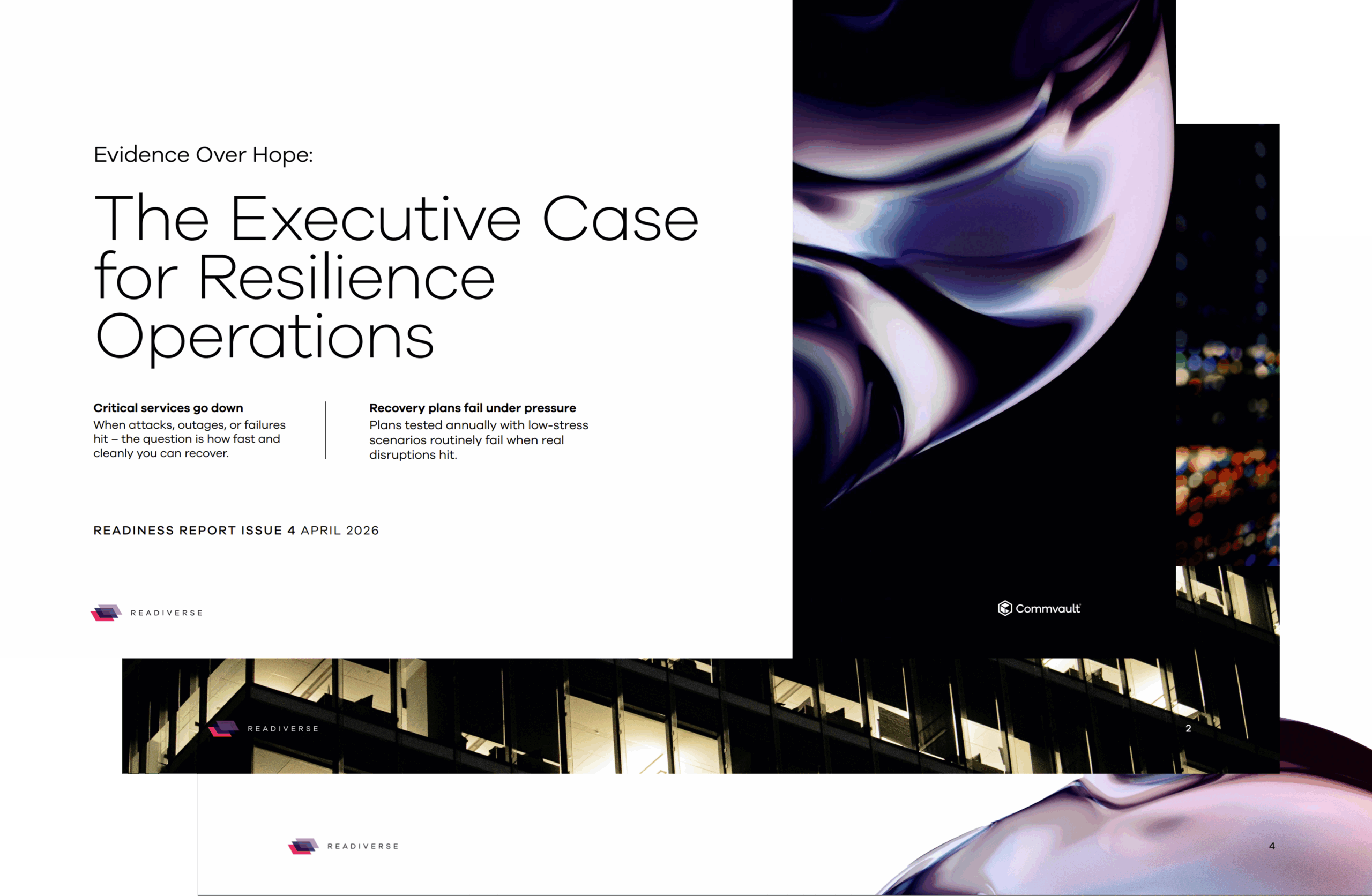
The Executive Case for ResOps (Resilience Operations)
Most enterprises have backup systems, disaster recovery plans, and security controls. When disruption hits, that’s often not enough – because none of those answer the question that actually matters: Can we actually come back, for each critical service, right now?
That gap is what ResOps (Resilience Operations) solves.
STRIVE Podcast
Why “Hope” Is Not A Recovery Plan
Watch this STRIVE episode on why most recovery plans fail when it matters most – and how a new operational discipline called ResOps changes the equation.
The Reality: Recovery Is Harder Than Most Organizations Realize
Most organizations believe they’re prepared to recover.
The data suggests otherwise.
76%
of organizations that had fully recovered from a breach said that it took longer than 100 days to do so.
58%
of organizations have not fully defined what their minimum viable organization looks like — meaning they have no agreed answer for what must come back online first.
Key Insights
The Stakes
Organizations averaged 11.3 cyberattacks in the past year, according to IDC. Most organizations have recovery plans written during normal conditions, tested once a year in controlled scenarios, and never validated against a real disruption at scale. They measure recovery time objective and recovery point objective, but not whether the data they’re recovering from is actually clean.
Yet modern attackers target backup infrastructure first. Compromising your ability to recover compounds the damage of any attack and extends the impact long after the initial breach is contained.
What Makes This Different
This report makes the executive case for ResOps – a new operational discipline that treats recoverability as a continuously governed, measurable property of the business. It gives CIOs and CISOs a practical framework for defining which services must survive, designing for controlled degradation, and proving recovery capability before the incident arrives.
You’ll learn how to structure a ResOps Council, set impact tolerances that drive investment decisions, and measure resilience using Service Resilience Indicators – including Mean Time to Clean Recovery, the missing metric between cybersecurity and business continuity.
The Five Domains of ResOps

Resilience governance

Recovery planning

Recovery architecture

Recovery assurance

Resilience measurement
IMPLEMENTATION GUIDE
Put the framework to work
The ResOps Technical Implementation Framework* gives your architects, engineers, and analysts concrete steps to build what this report describes – across all five ResOps domains, from resilience governance and recovery architecture to continuous validation and measurement.
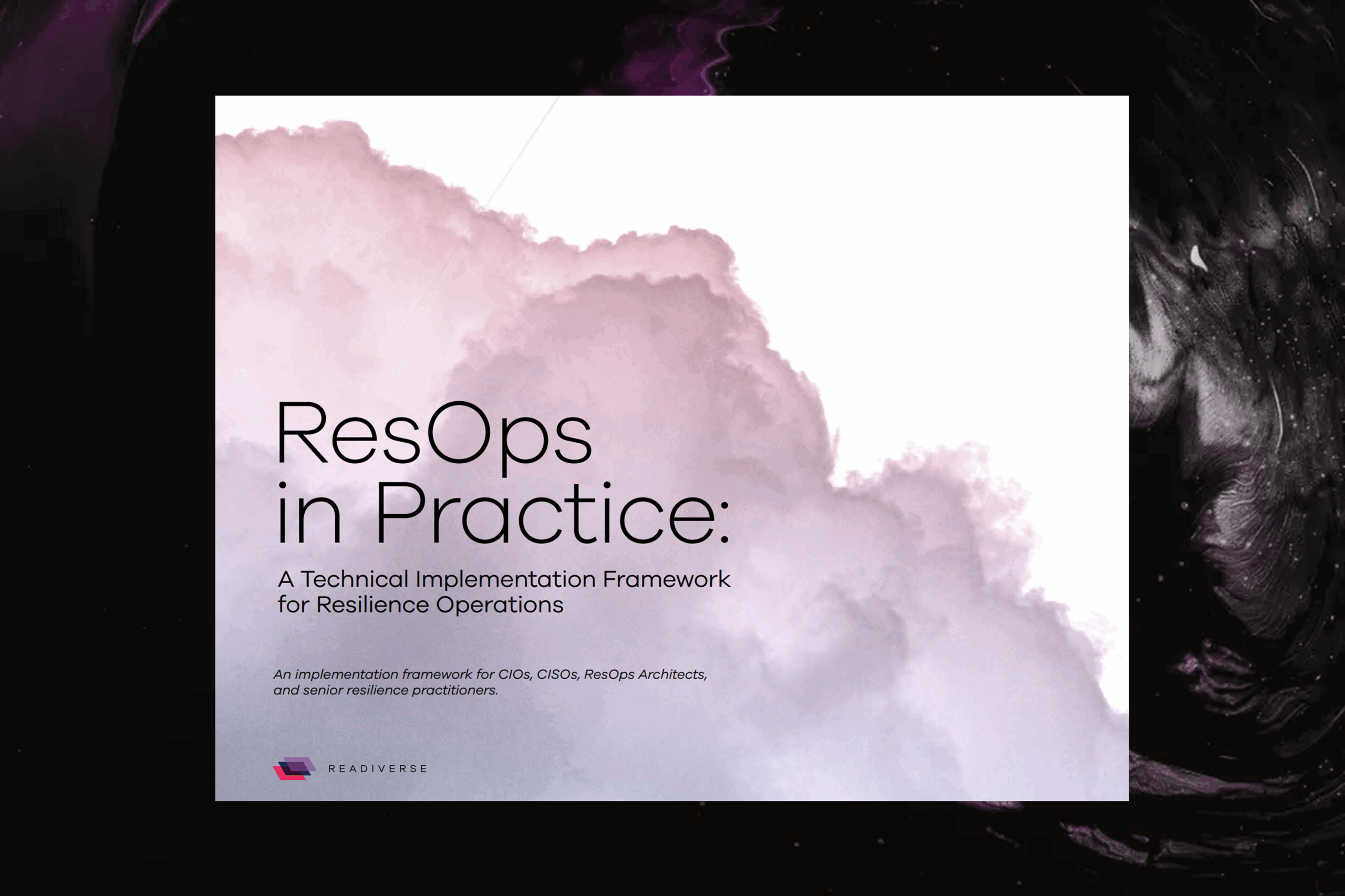
*Note that we are eager for feedback from the community on the ResOps framework and what’s required to successfully implement ResOps. If you would like to provide feedback and help to further define ResOps technical implementation details, join the community.
Related resources

Evidence Over Hope: Will Your Recovery Plan Hold Up Under Pressure

Resilience Operations: The Discipline That Makes Readiness Provable

From Minimum Viability to Operational Resilience: ResOps in Practice
honor your leaders
Time + Commvault CISO of the Year
Celebrating the leaders forging the future of cyber resilience, clearing the way for business success, while setting the path for others to follow.
-
Nominations close on June 20
-
Winner notified by July 31
-
Winner announced on September 22